Creative Process: An Invitation for Dior
Introduction
Every calligrapher dreams of the project that pushes them beyond their comfort zone—the commission that demands everything they have learned and then asks for something more. For me, that project arrived in the form of a request from one of the most iconic names in fashion: Dior.
The brief was both simple and daunting: create a series of hand-calligraphed invitations for an exclusive event celebrating the house’s heritage. The invitations needed to reflect Dior’s legacy of elegance while incorporating the warmth and authenticity of handmade craft. What followed was one of the most intense, rewarding creative processes of my career.
This is the story of that process—from the initial inquiry to the final delivery—and a window into what it takes to create calligraphic work at the highest level of luxury.
The Initial Brief
Understanding the Vision
The first communication came through a creative agency representing Dior’s events team. The initial brief was intentionally open, which is both a gift and a challenge for a calligrapher.
Key parameters from the brief:
- The event would celebrate Dior’s connection to art and craftsmanship
- Approximately 200 invitations would be needed
- The design should feel both timeless and contemporary
- Hand-calligraphed elements were essential
- The timeline was six weeks from concept to delivery
The agency shared mood boards, brand guidelines, and references to previous Dior events. I spent days studying these materials, absorbing the visual language of the house: the clean lines, the understated luxury, the reverence for craft that mirrors my own values as a calligrapher in Puebla.
The First Call
A video call with the creative director clarified the vision. She spoke about wanting the invitations to feel personal and intimate—each one a small work of art that would signal to the recipient that this was no ordinary event.
“We want our guests to feel the weight of the invitation in their hands and understand, before they even open it, that something extraordinary awaits them.”
That sentence became my guiding principle. Every decision I made from that point forward was filtered through one question: does this make the recipient feel that something extraordinary awaits them?
Concept Development
Research and Inspiration
Before putting pen to paper, I immersed myself in research. This included:
- Studying historical Dior invitations from the archives
- Examining the typography used in Dior branding across decades
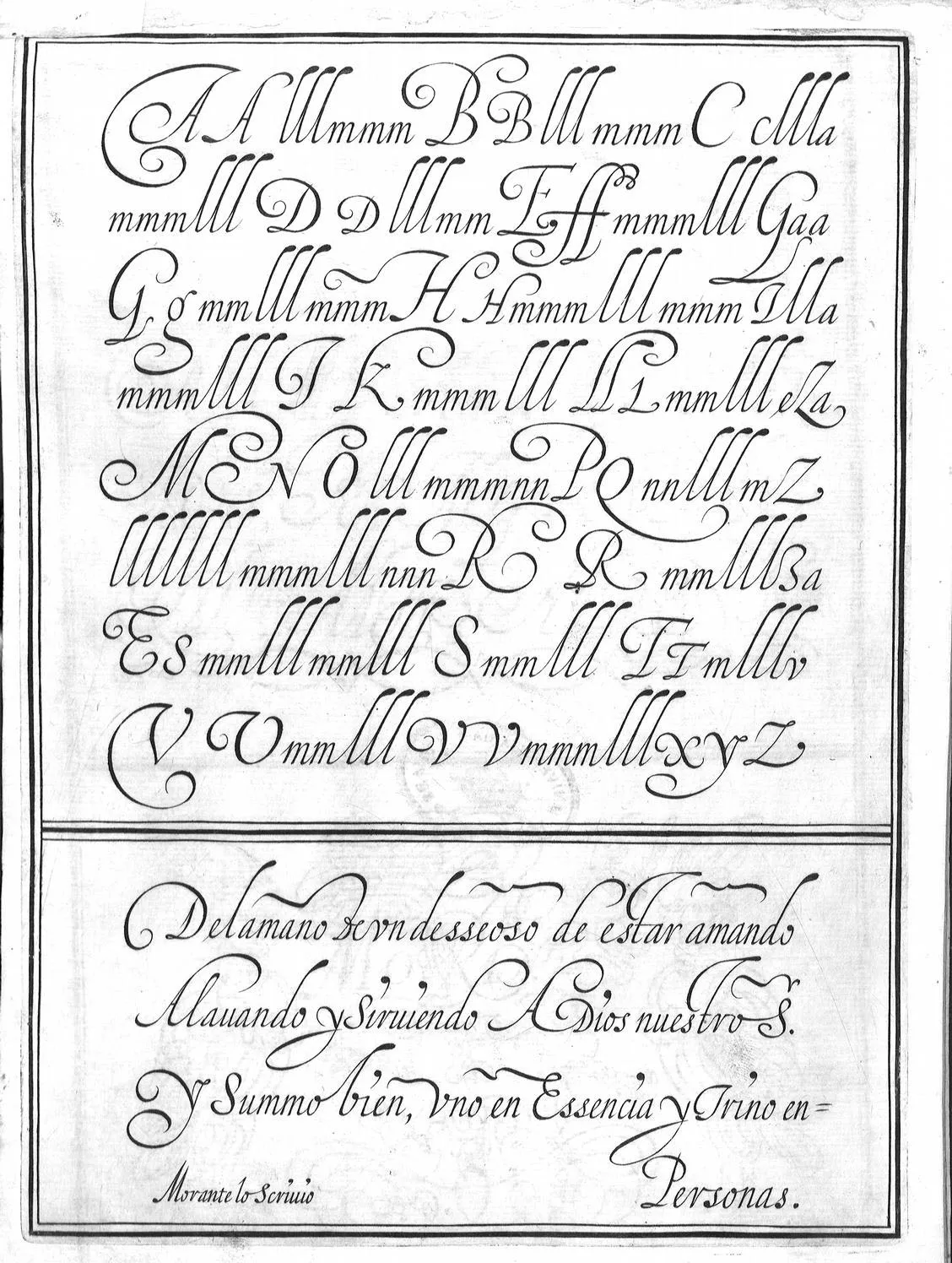
- Researching French calligraphic traditions, particularly the French Round Hand
- Looking at contemporary luxury stationery for current trends
- Drawing inspiration from Puebla’s own artisanal heritage
The intersection of French elegance and Mexican craftsmanship became a recurring theme in my thinking. Both cultures share a deep reverence for handmade beauty, and I wanted the invitations to honor both traditions.
Sketching and Exploration
I filled three sketchbooks with concepts over the course of a week. The process was deliberately unstructured—quick thumbnails, loose lettering studies, color experiments with watercolor and ink.
Key concepts explored:
- Classic copperplate with minimal ornamentation
- Modern pointed pen with architectural flourishes
- Watercolor lettering with gold leaf accents
- Mixed media combining calligraphy with botanical illustration
- Minimalist design with a single, striking calligraphic element
Each concept was photographed and organized into a presentation. I selected the strongest four to develop further.
The Proposal
The proposal I sent to the agency included:
- Four distinct design directions with mock-ups
- Material specifications including paper stock, ink types, and finishing options
- A detailed timeline from approval to delivery
- Pricing reflecting the complexity and volume of the project
Within 48 hours, the response came back: they loved Concept 3—the watercolor lettering with gold leaf accents—but wanted elements of Concept 2’s architectural flourishes incorporated. This synthesis would become the final design.
Material Selection
Paper
The paper needed to be substantial enough to convey luxury but refined enough to feel elegant. After testing dozens of samples, I selected a 640 gsm cotton paper from a Italian mill. The paper had:
- A smooth, hot-pressed surface ideal for fine calligraphy
- A subtle ivory tone that complemented the Dior aesthetic
- Exceptional durability for handling and mailing
- A beautiful deckled edge that added artisanal character
Ink and Paint
The color palette was carefully chosen to align with Dior’s brand while allowing the handmade quality to shine:
- Primary text — Iron gall ink for its deep, permanent black and historical resonance
- Accent lettering — Watercolor in a custom-mixed shade of Dior gray
- Flourishes — Sumi ink with varying dilution for tonal depth
- Gold accents — 23-karat gold leaf applied by hand
The Seal
A custom wax seal was designed featuring a simplified version of the Dior monogram. The wax was a deep burgundy with subtle gold mica, and each seal was hand-poured and stamped individually.
The Production Process
Creating the Master
Before producing 200 invitations, I needed to create a master version that would serve as the reference for the entire run. This master went through three iterations:
First iteration — The initial execution revealed that the watercolor accents were too bold, overpowering the calligraphy.
Second iteration — Adjusted the watercolor dilution and refined the flourishes, but the composition felt unbalanced.
Third iteration — The final master achieved the perfect harmony between calligraphy, watercolor, and gold leaf. This was the version approved by the creative director.
Setting Up the Production Line
Producing 200 identical-yet-unique invitations required a systematic approach. I organized my Puebla studio into stations:
- Pencil layout station — Each invitation was lightly sketched with guidelines
- Calligraphy station — Primary text was lettered in iron gall ink
- Watercolor station — Accent lettering and washes were painted
- Flourishing station — Decorative elements were added
- Gold leaf station — Gold leaf was applied and burnished
- Wax seal station — Seals were poured, stamped, and attached
- Quality control station — Each piece was inspected and approved
The Rhythm of Production
There is a meditative rhythm to producing multiple pieces of the same design. By the twentieth invitation, my hand had internalized the letterforms. By the fiftieth, I was working with a flow state that made the hours disappear.
I worked in batches of twenty, allowing drying time between stages. The entire production phase took approximately three weeks, working six days a week.
Daily production schedule:
- Morning (3 hours) — Calligraphy on 8-10 pieces
- Midday break
- Afternoon (3 hours) — Watercolor, flourishing, and gold leaf on morning pieces
- Evening (1 hour) — Quality review and preparation for the next day
Challenges and Solutions
Consistency vs. Uniqueness
The central tension in any hand-produced run is maintaining consistency while preserving the unique character of each piece. Machine-printed invitations are identical; hand-calligraphed ones should not be.
Solution: I established tolerance ranges for each element. Letterforms needed to be recognizable as the same design, but slight variations in stroke weight, spacing, and flourish execution were not only acceptable—they were desirable.
Gold Leaf Application
Gold leaf is notoriously unforgiving. It adheres to sizing, tears easily, and requires a steady hand and controlled environment.
Solution: I created a dedicated gold leaf station with:
- Humidity control to prevent static
- A still-air environment (no fans or open windows)
- Proper lighting to see the nearly invisible sizing
- A systematic application process that minimized handling
Time Pressure
With a six-week timeline and three weeks of production, there was no room for error or delay.
Solution: I built buffer time into every stage and ordered all materials before beginning production. I also enlisted a trusted assistant to handle preparatory work like guideline drawing and wax seal preparation.
Quality Control
Every single invitation was inspected against the approved master. Pieces that fell outside the tolerance range were set aside and recreated. The rejection rate was approximately 8%, meaning I produced roughly 220 invitations to deliver 200 that met the standard.
Quality criteria:
- Calligraphy legibility and consistency
- Watercolor application within expected range
- Gold leaf coverage and adhesion
- Wax seal clarity and placement
- Overall aesthetic harmony
Packaging and Delivery
The finished invitations were packaged with the same care that went into their creation:
- Each invitation was placed between sheets of acid-free tissue paper
- Groups of ten were wrapped and boxed
- Boxes were sealed with the same burgundy wax seal used on the invitations
- A handwritten note of thanks accompanied each box
The delivery was hand-carried to the event venue in Paris. Seeing the invitations arranged in their final context—the soft lighting, the anticipation of the recipients—was a profoundly moving experience.
Reflections on the Process
What I Learned
Working at this level taught me invaluable lessons:
- Preparation is everything — The weeks of research and planning made the production phase possible
- Trust your instincts — The creative director chose my proposal because of my unique perspective, not because I could mimic existing Dior designs
- Systems enable creativity — The production line freed me to focus on the artistry of each piece
- Luxury is in the details — Every element, from the paper edge to the wax seal composition, contributed to the overall impression
The Puebla Connection
Creating this project from my studio in Puebla added a layer of meaning that I hope came through in the work. The artisanal traditions of this city—the patience, the attention to detail, the reverence for craft—are the same values that define the House of Dior. In many ways, this project was a conversation between two craft traditions separated by geography but united in philosophy.
“True luxury is not about expense—it is about intention. Every decision, from the choice of paper to the angle of a flourish, communicates respect for the recipient and reverence for the craft.”
Advice for Aspiring Luxury Calligraphers
If you dream of working at the highest levels of calligraphic art, here is what I recommend:
- Build a portfolio that tells a story — Show not just your technical skill but your creative thinking
- Understand the language of luxury — Study high-end brands and what makes their visual communication distinctive
- Develop your unique voice — Clients hire you for what only you can offer
- Be professional and reliable — Talent opens doors; professionalism keeps them open
- Never stop learning — Every project, successful or not, is an opportunity to grow
Conclusion
The Dior invitation project remains one of the defining experiences of my career as a calligrapher. It pushed me technically, creatively, and emotionally. It affirmed that the values I hold as an artisan in Puebla—patience, precision, passion—are universal languages that resonate across cultures and industries.
Every calligrapher has the potential to create work that moves people. Whether you are lettering a wedding invitation for a neighbor or an invitation for a fashion house, the principles remain the same: understand the vision, honor the craft, and pour your heart into every stroke.
The invitations are now treasured keepsakes in the hands of their recipients. But the real gift was the process—the deep focus, the creative problem-solving, the quiet satisfaction of work done well. That is what calligraphy gives me, project after project, stroke after stroke. And that is what I hope to keep giving back to the world through this beautiful art form.